Viva Loss, Sara Fran Wisby

"Viva Loss"Viva Loss, by Sara Fran Wisby, reviewed by Paul Corman-Roberts.

I have discovered, through a series of shoddily unscientific
experiments,-none of which would stand up to a reasoned
scrutiny by a qualified professional, but which are none-
the less extremely valuable to me-that the type of light man-
ifested in boys, while it can be trained, prefers to play.

From “Light Gains Intensity As It Is Approached”

There is a story told by guitar god Eric Clapton back in the late sixties about going to see an upstart blues sensation in a London club by the name of Hendrix. When Slowhand gets to the club, he is intercepted outside by a shell shocked Pete Townsend who informs Clapton that the both of them may as well take up selling door to door insurance. Clapton heads into the club for Hendrix’ second set an concludes that Townsend overestimated their prospects. Continue reading

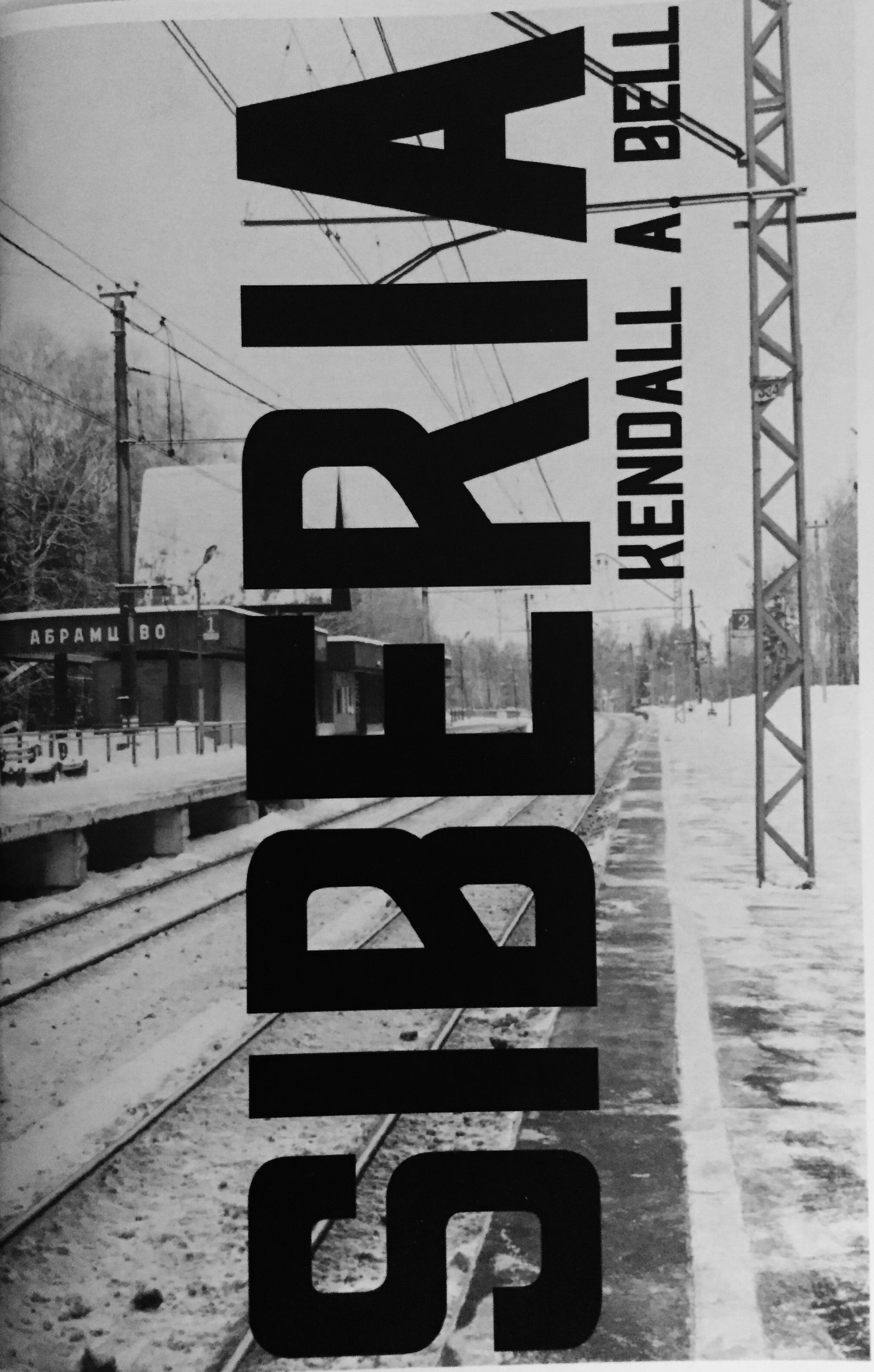
Saigon, Hanoi Or Da Nang, David S. Cross. Poptritus Press

David S. CrossSaigon, Hanoi Or Da Nang, David S. Cross. Poptritus Press, Reviewed by Lynn Alexander.

This is the second book of poetry by David S. Cross, and the second publication of Poptritus Press of California, U.S. Cross is a Canadian poet who has been published in both the United States and Canada, and more can be found about him at his website here. Saigon, Hanoi Or Da Nang is available now, through the publisher.

What are the memories of wicked men, pretending to be good?
What is history to a nation whose goals, enumerated, noble- become the goals of selective and strategic interests, in the service of the powerful? Who are the heroes? Continue reading

[+!] Kane X. Faucher, Matina Stamatakis, John Moore Williams

[+!] Kane X. Faucher, Matina Stamatakis, John Moore Williams, Distributed by Calliope Nerve. Reviewed by Lynn Alexander.
In the interest of unnecessary disclosure- but perhaps by way of confessional preface- I had to read this more than once. Even when I took up the pen to get going with my thoughts, I found myself stalling, crossing things out. When they said experimental, they weren’t kidding.  WHY was it so hard to articulate my impressions of this book? It’s not that I didn’t enjoy the experience, I did-even more so in subsequent returns to it. You might say it grew on me, the way odd things do.

The challenge though in “reviewing” comes from the very nature of the work, the experimental nature, and the fact that very often what is described as experimental is actually quite predictable. Ah- but not so here. The collaborators, I think, want you to step away from your comfort zone and abandon a few dozen notions when you sit with this.

So- how DOES one attempt to write about a work in some kind of objective way (no such thing) when much of the experience wouldn’t even be considered “conscious”? You want to engage, actively and intellectually, but there is something about the strangeness of [+!] that pushes that away. Continue reading

"Dead End Road", Richard Wink

Richard Wink’s new poetry book Dead End Road, published internationally by BeWrite Books (UK), reviewed by Lynn Alexander. An interview with Richard Wink is forthcoming in PRATE.

Dead End RoadUK poet Richard Wink has been published widely and has released six poetry collections through various publishers, such as erbacce, Trainwreck Press, Shadow Archer Press, and more. His poetry has appeared here at Full of Crow Poetry, and he has been active in the independent press scene through his support for small and independent presses and his work with Gloom Cupboard.

This poetry collection, through BeWrite Press, will also be available as an eBook- the “way of the future” and a medium that has already been embraced by small presses as a remedy to the costly and prohibitive process of connecting writers and readers.

Dead End Road includes over fifty poems, both previously published and new work, most of the poems have not been published before. Continue reading

Apperceptions of Reinterpretations, Felino Soriano

Apperceptions of Reinterpretations (Calliope Nerve Media), poetry by Felino Soriano, Reviewed by Lynn Alexander.

Felino Soriano has this amazing ability to weave a multi-dimensional scene replete with hidden histories and surmised contexts from works of art. I first became familiar with these poems from the work published in Full of Crow Poetry, then set out to find and read more of his work. I soon made my way to his website and then to this “e-chapbook” at Calliope Nerve. Continue reading

"Antisocial", David Blaine

Connie Stadler (Calliope Nerve) reviews David Blaine’s new chapbook from Outsider Writers Collective: “Antisocial”.

David’s Blaine “Antisocial” is a hidden treasure. You expect poetic diatribes and rants, you get wonderful wit laden bites that must be read a second or third time or the rich profundity/in-your-face irony will surely be missed. Though seeming toss-offs ,these are multi-faceted, rich gems.
There are many targets here, but not specific “causes”, Blaine rather wishes to probe the fertile underbelly of the genesis of our sequential stupidities: Continue reading

"Ceilings" by Jeffrey S. Callico

Ceilings, by Jeffrey S. Callico. Poetry. Reviewed By Lynn Alexander.

Ceilings is not at all what I expected from Jeff Callico, but there it is: simple language, clear, cool, basic. They sit there, these short lines on these open white pages. You are alone with the poems.

I am familiar with a lot of Jeff Callico’s short fiction at this point, he has a certain way of presenting language, and he is not one to embellish. He has a style that is recognizable to me now, made up of linking certain lines, his repetition, this strange deconstruction of his observations of behaviors, reducing things down.To what? To their basic elements. Continue reading

"Ghost Town, USA" by Christopher Luna

I admit that I’m biased. I have been a fan of Christopher Luna’s poetry for years and I have high expectations, particularly since I know how dedicated he is- not only to the craft but to the communities that can be formed and nurtured around creative work.

Ghost Town, USA refers to the poet’s town of Vancouver, Washington, a town in the shadow of the infamous Portland. The name comes from his first impressions of the town- a place without people, even in the middle of the afternoon. For a transplanted New Yorker, this can be unsettling, and for a poet like Christopher Luna who writes from a place so rooted in observations of the tangible, one can imagine how difficult it must have been in the beginning as he struggled to get used to the silence. Continue reading

"A White Girl Lynching" by Elizabeth P. Glixman

Cover, A White Girl Lynching“A White Girl Lynching” by Elizabeth P. Glixman is an offering from Pudding House, an independent publisher of poetry with a reputation for selecting manuscripts from poets who “do right” by their art, meaning poets who give dutiful consideration to the process in terms of poetry as craft. Glixman’s commitment is apparent in this chapbook, as she accomplishes what she set out to do: explore “our ‘feeling’ natures as symbolized by poetry”.
In particular, Glixman looks at human dignity, and how the affirmation of dignity relates to her hopes for a more just and united world where people are better able to coexist peacefully mindful of the validity and benefit of our differences. When Glixman speaks of “lynching” she is no doubt aware of the historical context of the word and it’s connection to violence, persecution, violation. She seems to have chosen the word to suggest in a very powerful and forthright way that lynching is both a physical act and a social act, whereby people are stripped of an “important element of individual dignity”.(Preface,Glixman) Continue reading

Falling Forward by Rebecca Schumejda, Sunnyoutside, 2008.

falling-forward-cover-for-foc-1

“Falling Forward” is the first full length collection of poetry by Rebecca Schumejda and it does not disappoint.  This beautifully crafted book, by Sunnyoutside from Buffalo, features the artwork of Ed Herrera.  The stark imagery of a tree above ground and its roots below say a lot about what you will find inside in Rebecca’s book; poems which are culled portions of her life that shed light and reap darkness.


This book is divided into several sections with each one being dedicated to someone in her family:  her husband, her brother, and her mother.  Rebecca is not afraid to look at herself critically or turn that eye on her family members, all of which are still in different stages of grieving at the loss of their husband and father.  She recalls her childhood in each of these sections, save the one to her husband, but even in that one she looks forward to the upcoming childhood of her unborn daughter.


In The Truth is Too Heavy, we find very strong poems about the quietness that creeps into a marriage in various stages of dilapidation, despite paled efforts to fix it, and a child on the way.  It speaks to those things we all look for in a long standing relationship, things we think show that we have reached a higher plane of love, like silent explanations between two lovers and gestures of body that tell more than words, but time makes us realize that these are the pulled cotter pins from the grenade that lies in the center of marriages.  Rebecca’s poems show us what is relinquished in communication breakdowns that can never really be gotten back.  She crafts these truths in poems such as “Tree of Knowledge”, “Divorce”, and “Four Months From Now.”  My favorite poem of this section is “Scrambled Eggs”:


“When you pull your toast apart,

I surrender my fork,

fashion my thumb and index finger

into a beak and pick at your crust:


this is how I tell you

that I don’t need anything

besides reassurance.


You stir your coffee

with the handle of a butter knife:

this is how you tell me

that you’re not listening.”


The second section in her book “Falling Forward” is called Folded Like Two Hands in Prayer and is filled with remembrances of her father who passed away, but these poems have a much different feel than those in a previous collection called “Dream Big, Work Harder” which is also available at Sunnyoutside.  These poems have a more shared feeling.  Many of them include, or are directly about, her brother’s reaction to the death of their father and how each of their adjustments to this loss net them differently, even when they are swimming in the same sea of grief.  These poems speak to the challenges between them and touch on an unspoken hostility.  This is pretty evident in poems like “Wet Paper Planes” and “Rock, Paper, Scissors”, but the most touching poem is “Workman’s Prayer” that spans religion and choices and hard love:


“That afternoon I understood

my father’s vision of god

when the sun’s haloed head

bowed down

behind storm clouds

and the distance between

thunder and lightning,

father and daughter,

folded like two hands in prayer.”


In true form, Rebecca never disappoints and saves the best for last in a section dedicated to her mother called Overgrown with Weeds and Regrets. We see the other side to her emotional puzzle and can revel in the trinity of her family.  These poems are strong in conviction and heart showing the degradation of her mother’s personality in the face of loss, or allowing this devastation as a way to give her mother a touch of grace.  Rebecca tackles sensitive issues about regret in the poem “The Recipe Calls for Two Eggs”:


“Before she gave birth

she wanted more;

she spent hours blending watercolors

to match the intensity of her dreams:

magenta, teal, canary, violet…

Because before was easier—

she depended on preparations

rather than outcomes.”


She explores alcoholism in “Halloween Costumes” and “When the Check Clears”, and cold disregard for pity in “Evictions”, but Rebecca sums up the essence of her constitution in the poem “Coney Island”:


“I have never been afraid of tides,

waiting out storms, or aluminum cans.

I seesaw tabs until they snap.

I’ve run away from everything that

means anything to me at some point;

I always end up back where I started.”


Rebecca Schumejda is a valuable assest to the small press and to modern poetry.  Her words are raw and truthful and she is never afraid to turn the mirror on herself and get the truth in return.  Her work is emotional without being sappy and her language causes chemical reactions in the brain that make one think about how the transgressions of our lives give us character and ultimately make us exactly who we are meant to be.  You need this book on your shelf, in your backpack, in your hand.