“Dinosaur Ditch” by Tim Murray

‘Dinosaur Ditch’ is a new chapbook of poetry from CFDL Press, available now, by Tim Murray. Discussed on the Literary Underground by Elynn Alexander

“Dinosaur Ditch” was the neighborhood lot of the speaker’s childhood, a place where kids played and climbed trees and got away from their houses in a neutral, outdoor space.

“where boys spend summers pissing from trees

In Dinosaur Ditch.”

Many kids can think back to a similar place in childhood and like Tim, have discovered that they now sit beneath suburban homes. (He describes it in the Project U show, give it a listen) Our Dinosaur Ditches were never as big as they seemed in our memories and like those perceptions, much is necessarily left there. We grow up, we move on.

In this way, Dinosaur Ditch is established as the childhood lost when confronting the “real world” tragedies that erode innocence.  Part of us ends up buried under a suburban home as well.

The “real world” is a town in Indiana: “Where the mercury-laced waters of Lake Michigan lap in the north”, a place of industrial accidents, pollution, generations of plant workers, “where Red Cunningham lost his arm to the alligator machinery of industry.” These were not terrible childhoods, this is acknowledged. There were jobs and families had some security, their needs were met. (pork chop dinners, etc.) Continue reading
Watch The Doors As They Close, Karen Lillis

‘Watch The Doors As They Close”, a novella from Spuyten Duyvil, by Karen Lillis. Discussed by Elynn Alexander for Crow Reviews. 2012. 

If you don’t know about Karen Lillis, then let me take a few lines to introduce you because she is somebody that you will want to keep an eye on, and you can do so here at her blog: Karen The Small Press Librarian. 

Karen is a writer, of course, but also an advocate and community builder among those who find themselves drawn to the small press. It would take pages to do her efforts justice, and I hope that it is sufficient to say here that Karen represents the kind of inclusive advocacy and defense that we need and her efforts to organize, facilitate, and indeed- make the case for small press- have not gone unnoticed by many of us. We are honored to have her latest novella in our hands here at Full Of Crow and wish only the best for the talented and respected Karen Lillis as she continues on her tour of readings and appearances. This represents another achievement in her writing career, and she has reason to be proud of it. Many of our readers recall that she was nominated for the Pushcart by our editors for her fiction pieces in one of our quarterly publications, Blink Ink.

Watch the Doors as They Close is a new novella from Spuyten Duyvil Press, distributed by Small Press Distribution.

The narrator writes about Anselm, struggling to process not only the experience of being with him in the context of her own expectations and version of love, but in so doing- tells the story of a relationship and that interface where two people with disparate histories attempt to connect. We know that they do connect, but their lives don’t seem to integrate. They spend their time together parallel, unable to push any closer to intimacy, and in the end they part ways rather easily. Or so it seems. The narrator has taken to analysis, assembling facts and observations to more fully understand the relationship, sketching Anselm as subject.

She seems more capable, though appearing nameless and fleeting, even in her own story, recollections less their combined experience and more his past brought full circle to the present where she tries to make sense of the man she meets from her sketch of the man he was. She is like an ethnographer, gathering information to create a context for what she has observed in their time together. It doesn’t come across as sentimental or the fixation of a woman unable to let go, but rather, as the insight of an observer who, through love, has taken the time to transcribe her observations. In a sense, she honors him, and it is a story of “him” far more than “them” in the end.  Continue reading

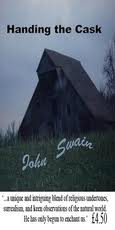
“Handing The Cask”, by John Swain

“Handing The Cask”, poetry by John Swain, published by erbacce press, UK. Reviewed for Full Of Crow by Elynn Alexander.

I keep saying that John Swain is a poet to watch, and I have published as much of his poetry as I could get my hands on including “Burnt Palmistry” and “The Feathered Masks” as well as including two of his poems when I guest edited the September 2011 issue of Graffiti Kolkata Broadside. His work has been nominated for awards and prizes and has appeared in Red Fez, part of our small press family.

The late Nobius Black of Calliope Nerve stated that John Swain “paints the world in words.” Sandy Benitez of Flutter Press said that “he has only begun to enchant us.” And I couldn’t agree more.

John Swain is a humble, reluctant artist who seems to shy away from the trappings of ambition and persona and somehow remains above all of that. It is this tendency that is part of his charm because it is refreshing, his work speaks for itself, and it reaches you without imposing. You want to let it in. In my opinion, some arrogance would be well deserved- but you won’t find it. When I first started reading his work, I couldn’t help but wonder: where the hell has this guy been? But every poet has their time, and here’s hoping that we continue to hear more from him.  Continue reading

Sunshine In The Valley, by Kyle Muntz

Sunshine In The Valley, CCM (Civil Coping Mechanisms) Press, by Kyle Muntz. Reviewed by Elynn Alexander for Full Of Crow Press.

We were here and we were really here. It kept us breathing.” (7)

It strikes me that they gather beneath the full sun, seeming to celebrate time’s passage rather than indulging in lamentation.

“...always to glorious burning.” (7) This is in contrast to the typical themes of the so-called human condition, creatures tethered to dread, in constant fear of our own mortality and with an often painful awareness of our insignificance. Living with the spectre brings a certain pressure to bear, beings set out to live in ways that maximize perceived “significance”: progeny, legacy, endurance of the corporeal made manifest through enduring actions and accomplishments. How to make one’s mark? How to distinguish one’s small life from an expansive tribe, exponential, a pool that consists of others with the same preoccupations, both present and ancestral? We compete with history. We want to BE something in our own right. We want to be enduring, somehow, different perhaps in the way that Muntz makes a distinction between a story and a legend. We want to be more than a story, we want to be embellished and etched into permanence, to linger. Continue reading

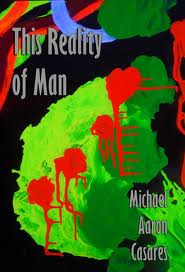
This Reality Of Man, by Michael Aaron Casares

“This Reality Of Man”, poetry by Michael Aaron Casares, published by Lizard’s Tale press, 2010. Reviewed by Elynn Alexander for Full of Crow.

Michael Aaron Casares takes a candid look at humanity, as an observer at times, at other times a participant. He asks us how we spend our time, what we are entitled to, what it means to live with authenticity, to be a “citizen” with responsibilities, to touch down inside our own lives in the context of the “mad swirl”. We live in a vast unknowable, without any sense of how these pieces fit together. Continue reading

“Forked Tongue”, by Craig Sernotti

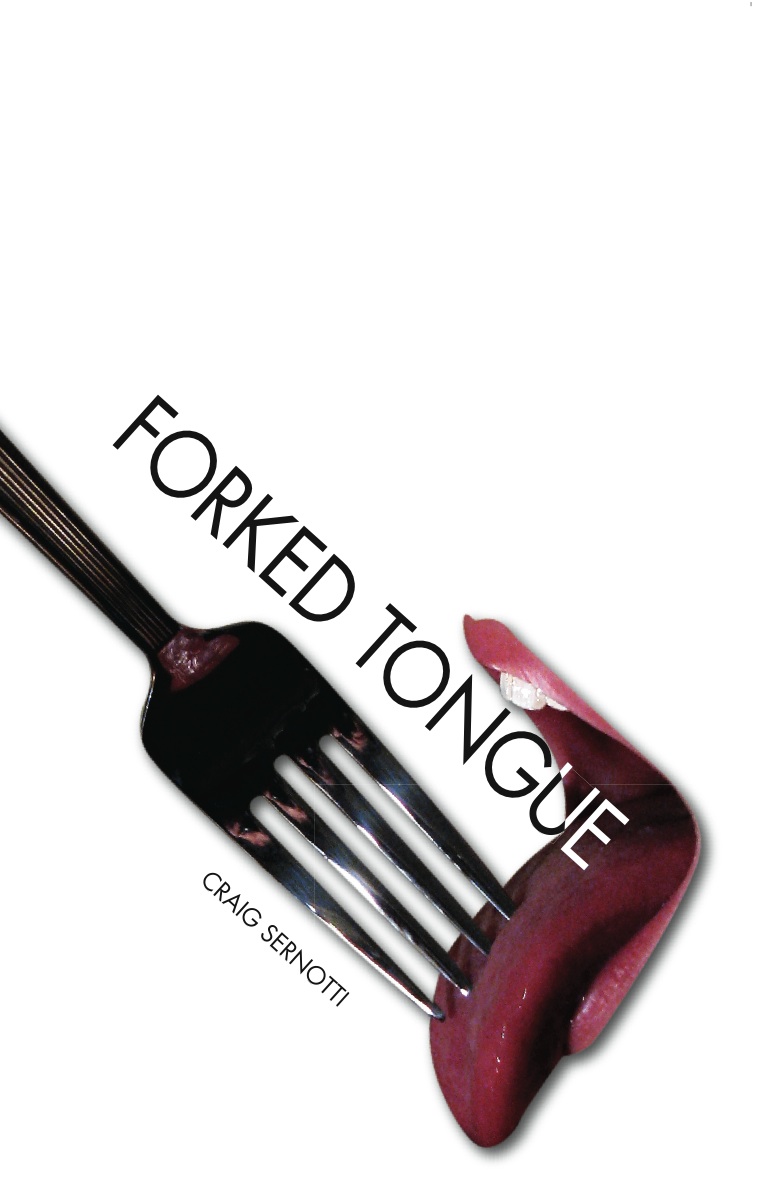
Forked Tongue, by Craig Sernotti, Published by Blue Room Publishing. Elynn Alexander for Full Of Crow Press. 

Nothing’s out there, so stop looking

Nothing’s inside, so stop retching

If you follow Craig Sernotti, you will probably find that these poems represent the style that you expect from him, and that is a style that you probably feel strongly about- you either like it, or you don’t.  There are topics that some readers are just not comfortable with: penises, blowjobs, vibrators, urine, big tits, flatulence. I don’t think Sernotti cares.

Continue reading

Rummaging In The Attic, by Constance Stadler

Rummaging In The Attic is a collection of poetry by Constance Stadler, produced by Differentia Press in 2010. (Read It Online Here)

Constance Stadler takes us through a mindscape, the attic housing of the seemingly disparate in context and chronology, at times rendered mute and others- in the words of Rich Follett- buoyant, ebullient. The attic holds hope in the face of gracious resignation, the poet both grieves and reaches. Continue reading

Noise Difficulty Flower, by J.D. Nelson

Noise Difficulty Flower, produced for download by Argotist Ebooks, written by J.D. Nelson. Discussed For Full Of Crow by Elynn Alexander. 

Who knows how long I have been interested in J.D. Nelson’s work, or how I first came across it. As a prolific poet, widely published, one is bound to run into him somewhere, in the usual places. But J.D. Nelson is not the “usual”. What he does is a different kind of poetry. You are amused, challenged, entertained, and you will be transported back to whatever it was that made you love the things you loved before life made the argument for “maturity”. Nelson is playful, but twisted. That said, Nelson doesn’t shy away from serious things, he just presents them right alongside. His poetry is a liberated strange. Continue reading