“White Vases” by John Swain

“White Vases”, John Swain. Discussed by Elynn Alexander for Full Of Crow Press.

Poets navigate with labels. It is just a part of the deal as people try to make sense of their associations and perhaps figure out their own sub-sects. What we find, however, is that poets surprise us and like all artists, poets evolve. We have to challenge ourselves to suspend the need to define one another because when we do, we stay open to a fuller catalog.
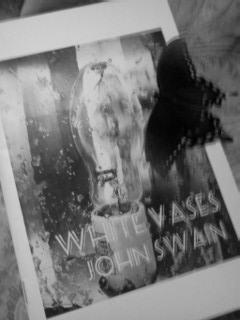
To put Swain’s work into a box (nature) is to minimize what he is doing, what poets do, and doesn’t speak to the question of WHY he brings up nature or birds or anything else.  It ignores the scope of what he accomplishes, and constitutes a cherry picking of themes that is a common practice with poetry and poetic criticism, this pursuit of labels and categorization.  It keeps the reader in periphery, and ultimately leads them away from “White Vases”.

As a reader of John’s work for years now, I would like to encourage people that read his work to resist the temptation to typecast him and to force associations.  I hope that I can at least make the case for the rewards of digging deeper, as there are few poets on my radar that bring me to the point of study the way he does. The beauty of his writing makes me want to sit with his poems; their resonance makes me want to understand why they touch me. Their brevity fools me into thinking that they are simple and then I embark on an experience that becomes more layered with each read and with each book I find myself taking what he is willing to share and adding it to the experience of him, and when you have that relationship with a poet’s work it is an appreciation that is difficult to convey.

I may lack the words to convince you, but I won’t stop trying. Continue reading
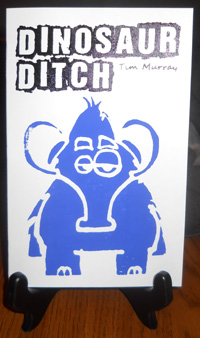
“Dinosaur Ditch” by Tim Murray

‘Dinosaur Ditch’ is a new chapbook of poetry from CFDL Press, available now, by Tim Murray. Discussed on the Literary Underground by Elynn Alexander

“Dinosaur Ditch” was the neighborhood lot of the speaker’s childhood, a place where kids played and climbed trees and got away from their houses in a neutral, outdoor space.

“where boys spend summers pissing from trees

In Dinosaur Ditch.”

Many kids can think back to a similar place in childhood and like Tim, have discovered that they now sit beneath suburban homes. (He describes it in the Project U show, give it a listen) Our Dinosaur Ditches were never as big as they seemed in our memories and like those perceptions, much is necessarily left there. We grow up, we move on.

In this way, Dinosaur Ditch is established as the childhood lost when confronting the “real world” tragedies that erode innocence.  Part of us ends up buried under a suburban home as well.

The “real world” is a town in Indiana: “Where the mercury-laced waters of Lake Michigan lap in the north”, a place of industrial accidents, pollution, generations of plant workers, “where Red Cunningham lost his arm to the alligator machinery of industry.” These were not terrible childhoods, this is acknowledged. There were jobs and families had some security, their needs were met. (pork chop dinners, etc.) Continue reading

Elevators: Rena Rosenwasser

Crow Reviews welcomes HK Rainey, and her review of “Elevators”, by Rena Rosenwasser. Kelsey Street Press. 


Up Rising: Rena Rosenwasser’s Elevators


I wanted to hold onto up, space of the


future, new building


You


               –  Rena Rosenwasser, Elevators

All manner of bodies can be seen as physical structures: our bodies are houses, our art is a cathedral, relationships are pieces of architecture buried under layers of miscommunication, missed opportunity and regret. Nowhere is this more clear than in Rena Rosenwasser’s newest collection of poetry, Elevators. In these poems, the narrator is a traveler, a lover, an artist, an archaeologist, expounding on and exploring the physical structures that we have built with our own hands.  Continue reading

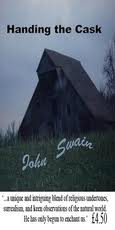
“Handing The Cask”, by John Swain

“Handing The Cask”, poetry by John Swain, published by erbacce press, UK. Reviewed for Full Of Crow by Elynn Alexander.

I keep saying that John Swain is a poet to watch, and I have published as much of his poetry as I could get my hands on including “Burnt Palmistry” and “The Feathered Masks” as well as including two of his poems when I guest edited the September 2011 issue of Graffiti Kolkata Broadside. His work has been nominated for awards and prizes and has appeared in Red Fez, part of our small press family.

The late Nobius Black of Calliope Nerve stated that John Swain “paints the world in words.” Sandy Benitez of Flutter Press said that “he has only begun to enchant us.” And I couldn’t agree more.

John Swain is a humble, reluctant artist who seems to shy away from the trappings of ambition and persona and somehow remains above all of that. It is this tendency that is part of his charm because it is refreshing, his work speaks for itself, and it reaches you without imposing. You want to let it in. In my opinion, some arrogance would be well deserved- but you won’t find it. When I first started reading his work, I couldn’t help but wonder: where the hell has this guy been? But every poet has their time, and here’s hoping that we continue to hear more from him.  Continue reading

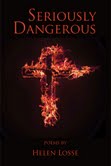
“Seriously Dangerous”, Helen Losse

AND WE HAVE LOST THE FAITH OF THE DAISIES


Seriously Dangerous, by Helen Losse, Main Street Rag Press, 2011.  62 pp. Reviewed by Paul Corman-Roberts for Full Of Crow.


“What shall I make of this hope in the dark?
What shall I make of this dark in the hope?”
  • From “Funeral in the Woods”

North Carolina poet Helen Losse is well steeped in the American tradition of plainsong so it may shock readers familiar with her style (or that of plainsong poetry or other Main St. Rag authors) to see a burning cross depicted beneath the title of her new collection of poems Seriously Dangerous. Continue reading

Somewhere Over The Pachyderm Rainbow

Somewhere Over The Pachyderm Rainbow: Living in An Elephant-Controlled 2010 Election Diorama, by Jennifer C. Wolfe, reviewed by Elynn Alexander for Full of Crow.

Read the last review of Wolfe’s work here: Review of Jennifer C. Wolfe’s “Healing, Optimism, and Polarization”, BlazeVOX Books.

Once again Jennifer C. Wolfe takes aim at American politics in her newest collection of poetry, forthcoming from Buffalo’s BlazeVOX books. In them, Wolfe goes beyond the current political climate to explore the role of the media and pundit-ainers who “report” with seemingly unprecedented partisan bias, and do so shamelessly. She is critical, and she doesn’t pretend otherwise. She is a political poet and she goes with it, her point of view obvious, and in my opinion the targets are pretty deserving of her scorn. As Wolfe argues, though, it isn’t so much about specific people as much as it has come to be about a certain mindset. And while few of us take a naive view of harmonious co-existence, the nastiness often catches us off guard and we find ourselves wondering if we are watching an episode of “Punkd”.

Are they for real? But the sad thing is, as we read these poems, we are reminded that they are. We are reminded of some of the most egregious and ridiculous examples of politicians and their antics, reliving our ‘head shaking moments’. This is Wolfe’s diorama: an assemblage of some of the ugliest vitriole that the political arena has to offer. Wolfe will remind you of bridges to nowhere, elementary school style hand scribblers, crosshairs as “humor”, the golden 2012 ticket, memoir fiction, selective amnesia, and more. She covers a lot of ground, and if you share her disgust, much will resonate. Continue reading

SF Poet Steps Up: Jazzbo Wind

“Jazzbo Wind”, by Michael Layne Heath, published by Kendra Steiner Editions, reviewed by Paul Corman-Roberts for Full Of Crow.

Michael Layne Heath’s poetry is about nothing if not music.  An original Washington DC punk rocker expatriated to San Francisco, Heath has found himself a nice little home with Kendra Steiner Editions, a poetry press that has now also become, surprise, surprise, a music label as well.  KSE publisher Bill Shute has had a long standing commitment to independent rock and roll and literature, and he’s got the writers to back up the commitment from the literary side of the enterprise with other rock  writers like A.J. Kaufman and Doug Draime. Continue reading

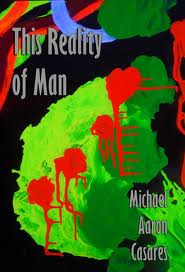
This Reality Of Man, by Michael Aaron Casares

“This Reality Of Man”, poetry by Michael Aaron Casares, published by Lizard’s Tale press, 2010. Reviewed by Elynn Alexander for Full of Crow.

Michael Aaron Casares takes a candid look at humanity, as an observer at times, at other times a participant. He asks us how we spend our time, what we are entitled to, what it means to live with authenticity, to be a “citizen” with responsibilities, to touch down inside our own lives in the context of the “mad swirl”. We live in a vast unknowable, without any sense of how these pieces fit together. Continue reading

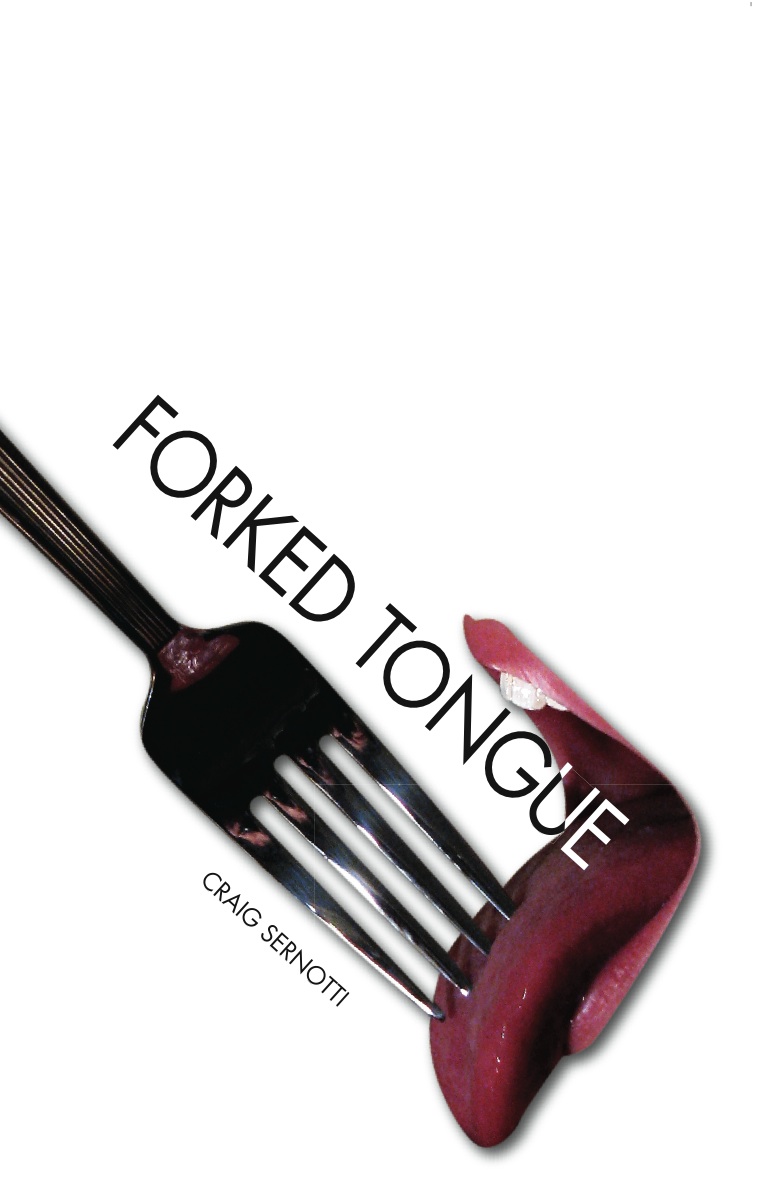
“Forked Tongue”, by Craig Sernotti

Forked Tongue, by Craig Sernotti, Published by Blue Room Publishing. Elynn Alexander for Full Of Crow Press. 

Nothing’s out there, so stop looking

Nothing’s inside, so stop retching

If you follow Craig Sernotti, you will probably find that these poems represent the style that you expect from him, and that is a style that you probably feel strongly about- you either like it, or you don’t.  There are topics that some readers are just not comfortable with: penises, blowjobs, vibrators, urine, big tits, flatulence. I don’t think Sernotti cares.

Continue reading

“Watching The Windows Sleep”, Tantra Bensko

Lynn Alexander for Full Of Crow on “Watching The Windows Sleep”, a chapbook produced by Naissance, written by Tantra Bensko.  A review by Spencer Dew appeared in decomp in January as well and you can check that out here. Find out more on Tantra Bensko at her website and at Naissance Press: Official Tantra Bensko Web Site and the Official Naissance Chapbooks Web Site.
“Whimsical ridiculous meets explorations of consciousness.” Bensko is known for her experimental poetry and fiction, work that is strange and surrealist. It seems fitting that she begins this chapbook with the poem “Non Containers”, as this is not a collection that can be easily defined, a mix of poetry and fiction that tantalizes the imagination: Continue reading